English

Views: 4 Author: Site Editor Publish Time: 2025-12-19 Origin: Site
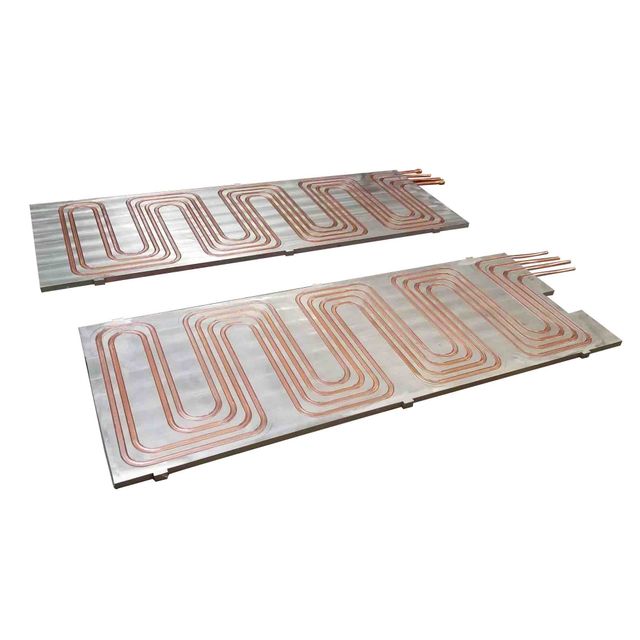
Custom assembled liquid cold plates are meticulously engineered thermal solutions designed to precisely meet the unique cooling demands of high-performance electronics, offering superior heat dissipation and temperature control by integrating specialized internal structures and materials. This tailored approach ensures optimal thermal performance and system reliability for demanding applications.
In today's rapidly evolving technological landscape, electronic components are becoming increasingly powerful and compact, generating significant heat that traditional air cooling struggles to manage. This challenge necessitates advanced thermal solutions. Custom assembled liquid cold plates emerge as a critical answer, providing targeted, efficient cooling that extends component lifespan and ensures stable operation. This guide explores the intricacies of designing and manufacturing these essential thermal devices, with a focus on how Kingka delivers tailored solutions.
Why is Custom Design Essential for Assembled Liquid Cold Plates?
What Factors Influence Custom Assembled Liquid Cold Plate Design?
What are the Key Design Considerations for Assembled Liquid Cold Plates?
How Does Kingka Approach Custom Assembled Liquid Cold Plate Design?
What are the Benefits of Partnering with Kingka for Custom Assembled Liquid Cold Plates?
Custom assembled liquid cold plate design involves creating a unique thermal solution by precisely tailoring the cold plate's materials, internal channel geometry, and assembly method to match the specific heat load, space constraints, and performance requirements of a particular electronic system. This bespoke approach ensures maximum cooling efficiency and seamless integration.
Unlike off-the-shelf solutions, custom design considers every aspect of the application, from the heat source's size and power density to the available coolant and environmental conditions. The "assembled" aspect means multiple components are precisely joined to form the final, optimized structure.
A "custom" assembled liquid cold plate is defined by its unique specifications, which are developed from scratch or significantly modified to perfectly fit a client's application, rather than using a standard, pre-designed product.
Examples: A cold plate designed for a specific EV battery module will have unique dimensions, mounting features, and internal flow paths optimized for that battery's thermal profile. Similarly, a cold plate for a high-power laser diode will be designed with specific materials and channel configurations to handle its concentrated heat flux.
Key Takeaway: Customization ensures that the cold plate is not just a cooler, but an integral, optimized part of the overall system's thermal management strategy.
Customization Aspects:
Unique Dimensions: Tailored to exact space constraints.
Specific Materials: Chosen for thermal conductivity and compatibility.
Optimized Flow Paths: Engineered for precise heat removal.
Customization directly impacts performance by optimizing the cold plate's ability to remove heat efficiently, maintain desired component temperatures, and integrate seamlessly, leading to enhanced system reliability and longevity.
Examples: An optimized internal fin design can significantly reduce thermal resistance, allowing a CPU to run cooler under heavy loads. Correct material selection prevents galvanic corrosion, ensuring long-term performance in specific coolant environments.
Key Takeaway: A custom-designed assembled liquid cold plate performs at its peak because every element is chosen and configured for the specific application's demands.
Performance Impacts:
Maximized Heat Transfer: Optimized internal geometry.
Precise Temperature Control: Prevents hot spots and thermal runaway.
Seamless Integration: Reduces installation complexity and potential issues.
Custom design is essential for assembled liquid cold plates because it enables precise thermal matching to unique heat sources, optimizes space utilization, ensures material compatibility, and ultimately maximizes the lifespan and reliability of high-value electronic components. Standard solutions often fall short in these critical areas.
The "one-size-fits-all" approach rarely works for advanced thermal management, where every watt of heat and every millimeter of space counts.
Off-the-shelf cold plates often have limitations in terms of fixed dimensions, generic internal channel designs, limited material options, and suboptimal thermal performance for specific, high-demand applications.
Examples: A standard cold plate might not fit the exact footprint of a new generation power semiconductor, or its internal channels might not be optimized for the specific flow rate and pressure drop available in a system. This can lead to inefficient cooling or mechanical fit issues.
Key Takeaway: Generic cold plates are suitable for broad applications but struggle with the precise, high-performance requirements of specialized electronics.
Off-the-Shelf Limitations:
Fixed Dimensions: May not fit unique component layouts.
Generic Thermal Performance: Not optimized for specific heat loads.
Limited Material Choices: May not be compatible with all coolants or environments.
Custom design addresses unique thermal challenges by allowing engineers to precisely tailor every aspect of the assembled liquid cold plate, from material selection to internal geometry, to meet the exact thermal and mechanical requirements of the application.
Examples: For a compact aerospace application with severe weight restrictions, a custom design might utilize lightweight aluminum with FSW construction and highly optimized micro-channels. For a medical device requiring absolute reliability, a vacuum brazed copper cold plate with redundant flow paths could be designed.
Key Takeaway: Custom design provides the flexibility and precision needed to overcome complex thermal obstacles that generic solutions cannot.
Addressing Challenges:
Precise Heat Load Matching: Optimizes for specific power densities.
Space Optimization: Maximizes cooling within confined envelopes.
Material Compatibility: Ensures long-term integrity with specific coolants and environments.
Custom assembled liquid cold plate design is influenced by critical factors such as the heat source's power and size, available space, coolant type and flow rate, desired temperature limits, and environmental conditions, all of which dictate material selection, internal geometry, and manufacturing processes.
A thorough understanding of these parameters is crucial for developing an effective and reliable thermal solution.
Heat load (the amount of heat to be dissipated) and footprint (the physical size and shape of the heat source) fundamentally affect the design of an assembled liquid cold plate, determining its overall dimensions, material thickness, and internal channel density.
Examples: A high-power IGBT module with a small footprint will require a cold plate with very dense, efficient internal channels and high thermal conductivity materials like copper. A larger, lower-power component might allow for simpler, wider channels and aluminum construction.
Key Takeaway: The thermal and physical characteristics of the heat source are the primary drivers for the cold plate's size and internal complexity.
Influence of Heat Load & Footprint:
Overall Dimensions: Must match the heat source and available space.
Material Selection: High thermal conductivity for high heat loads.
Channel Density: More channels for concentrated heat.
Coolant properties (e.g., specific heat, viscosity, compatibility) and system constraints (e.g., available pump pressure, flow rate, pressure drop limits) play a crucial role in assembled liquid cold plate design, influencing channel sizing, material selection, and overall system integration.
Examples: If the system uses deionized water, materials like aluminum might require specific surface treatments or be avoided if not compatible. A low-pressure pump dictates wider, less restrictive internal channels to minimize pressure drop.
Key Takeaway: The fluid dynamics and chemical compatibility of the coolant system are integral to designing a functional and long-lasting cold plate.
Coolant & System Influences:
Channel Sizing: Optimized for flow rate and pressure drop.
Material Compatibility: Prevents corrosion and degradation.
Pump/System Integration: Ensures proper flow and pressure.
Key design considerations for assembled liquid cold plates include material selection, internal channel geometry, manufacturing method, fluid connector types, and mounting features, all of which must be optimized for thermal performance, structural integrity, and ease of integration.
Addressing these aspects meticulously ensures a robust and efficient cooling solution.
Material selection is critical for performance and longevity as it directly impacts thermal conductivity, weight, cost, and compatibility with the coolant and operating environment of the assembled liquid cold plate.
Examples: Copper offers excellent thermal conductivity for high-performance applications but is heavier and more expensive than aluminum. Aluminum is preferred for lightweight solutions like in aerospace or automotive, often paired with FSW for robust construction. Stainless steel is chosen for corrosive environments or specific fluid compatibility.
Key Takeaway: The choice of material is a fundamental trade-off between thermal performance, mechanical properties, cost, and environmental resistance.
Material Selection Factors:
Thermal Conductivity: Dictates heat transfer efficiency.
Weight & Cost: Influences overall system design and budget.
Corrosion Resistance: Ensures longevity with specific coolants.
Considerations for internal channel geometry include channel width, depth, fin density, and flow path complexity, all designed to maximize heat transfer surface area, induce turbulence for better mixing, and minimize pressure drop within the assembled liquid cold plate.
Examples: Micro-channels are used for extremely high heat flux applications, offering large surface area but potentially higher pressure drop. Serpentine or parallel flow paths are chosen based on desired temperature uniformity and flow distribution across the cold plate.
Key Takeaway: The internal design of the cold plate is where the most significant thermal optimization occurs, balancing heat transfer with fluid dynamics.
Channel Geometry Considerations:
Surface Area: Maximized for heat exchange.
Turbulence: Enhances heat transfer coefficient.
Pressure Drop: Minimized to reduce pump power requirements.
Kingka approaches custom assembled liquid cold plate design with a comprehensive, client-centric methodology, leveraging over 15 years of expertise, a robust R&D team, and advanced manufacturing capabilities to deliver tailored, high-performance thermal solutions. Our process integrates thermal analysis, design optimization, and rigorous quality control.
We position ourselves as a one-stop thermal solution provider, guiding clients from initial concept to final product.
Kingka's design and analysis process for custom assembled liquid cold plates begins with a detailed understanding of client requirements, followed by thermal design, airflow simulation, and iterative optimization using advanced software and expert engineering knowledge.
Examples: Our technical R&D team, with over 25 years of experience, provides free design support, including thermal modeling to predict performance and identify potential hot spots before manufacturing. This ensures the design meets specific cooling targets efficiently.
Key Takeaway: Kingka's proactive design and analysis minimize risks and optimize performance, ensuring the final product is thermally superior and cost-effective.
Kingka's Design Process:
Requirement Gathering: Thorough understanding of client needs.
Thermal Design & Simulation: Predictive modeling for performance.
Iterative Optimization: Refining design for efficiency and cost.
Kingka's manufacturing expertise supports custom designs through a wide array of advanced processes, including CNC milling, FSW, vacuum brazing, and tube embedding, enabling the precise production of complex geometries and diverse material combinations for assembled liquid cold plates.
Examples: With 35 sets of high-end CNC machines, we can precisely machine intricate internal channels for deep-drilled cold plates or prepare components for flawless vacuum brazing. Our FSW capabilities allow for robust, lightweight aluminum cold plates for demanding applications.
Key Takeaway: Our comprehensive manufacturing capabilities ensure that even the most complex custom designs can be realized with high precision and quality.
Kingka's Manufacturing Support:
Advanced CNC Machining: For precise component fabrication.
Specialized Assembly Methods: FSW, vacuum brazing, tube embedding.
Material Versatility: Handling copper, aluminum, stainless steel.
Partnering with Kingka for custom assembled liquid cold plates offers benefits such as access to deep thermal expertise, advanced manufacturing capabilities, rigorous quality assurance, timely delivery, and comprehensive one-stop service, ensuring optimal thermal solutions and peace of mind.
We are dedicated to delivering high-quality, customized solutions that meet the most stringent industry demands.
Kingka ensures quality and reliability through a multi-stage inspection process, utilizing advanced testing equipment, and adhering to strict quality management systems throughout the design and manufacturing of every assembled liquid cold plate.
Examples: Every product undergoes at least four strict inspections using advanced equipment like CMMs, projectors, and micrometers. This meticulous process guarantees that each cold plate meets exact specifications and performs reliably in the field.
Key Takeaway: Our commitment to quality control is unwavering, ensuring that every custom assembled liquid cold plate delivered is of the highest standard.
Kingka's Quality Assurance:
Multi-Stage Inspection: Comprehensive checks at every production phase.
Advanced Testing Equipment: CMM, projectors, micrometers for precision.
Strict Quality Management: Adherence to industry best practices.
Kingka's commitment to customer service and delivery includes providing a professional sales team, 24/7 production support, rapid global delivery, and a customer-centric business philosophy focused on high efficiency and quality service from design to after-sales.
Examples: Our streamlined 4-step cooperation process, from design upload to receiving design analysis, ensures a smooth and efficient client experience. We prioritize on-time delivery to minimize supply chain risks for our partners.
Key Takeaway: Kingka offers a seamless, supportive, and efficient partnership experience, ensuring clients receive their custom assembled liquid cold plates promptly and without hassle.
Customer Service & Delivery:
Professional Support: Experienced sales and technical teams.
Efficient Process: Streamlined 4-step cooperation.
Global & Timely Delivery: Fast and reliable logistics.
Custom assembled liquid cold plate design is not merely about cooling; it's about precision engineering that empowers high-performance electronics to operate at their peak, reliably and efficiently. By meticulously tailoring every aspect—from material selection and internal geometry to manufacturing processes—these specialized thermal solutions address the unique challenges posed by modern technology. Kingka stands as a trusted partner in this complex field, offering unparalleled expertise, advanced manufacturing capabilities, and a steadfast commitment to quality and customer satisfaction. For any demanding application requiring superior thermal management, partnering with Kingka ensures a custom assembled liquid cold plate solution that is perfectly engineered for your needs, enhancing both performance and longevity.