English

Views: 7 Author: Site Editor Publish Time: 2026-04-09 Origin: Site
As we move deeper into 2026, the thermal management industry is obsessed with extreme solutions. With the exponential rise of AI processors and high-density computing, two-phase cooling systems (such as immersion cooling and advanced vapor chambers) dominate the headlines. These systems are undeniably powerful at managing extreme heat flux, leading many B2B procurement teams to wonder if single-phase, Traditional Liquid Cold Plates have become obsolete.
The reality, however, is quite the opposite. For the vast majority of mid-to-high power applications, upgrading to a two-phase system is a textbook example of the "performance overcapacity" trap.
This article explores why traditional liquid cooling—specifically the Deep Machining Liquid Cold Plate—is not only competing with but consistently outperforming two-phase systems in 2026 when evaluating cost efficiency, structural reliability, and long-term maintenance.
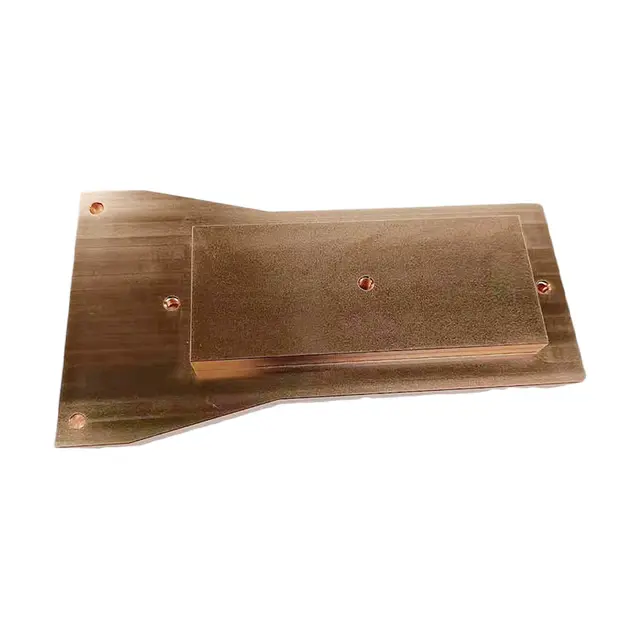
Two-phase cooling operates by allowing a dielectric fluid to boil and vaporize upon contact with a hot surface, absorbing massive amounts of heat through phase change. While this is necessary for a 1000W+ AI chip, it brings a host of severe engineering drawbacks.
These systems are highly complex, incredibly expensive, and notoriously difficult to maintain. They require exact phase change pressure controls, specialized dielectric fluids, and completely sealed, heavy-duty chassis designs. For standard power conversion, automotive, or telecommunication applications, deploying a two-phase system is a massive over-engineering mistake that inflates your Bill of Materials (BOM) and introduces unnecessary points of failure.
In contrast to the delicate complexity of two-phase cooling, traditional single-phase cooling relies on robust simplicity. This is best exemplified by Kingka’s Deep Machining Liquid Cold Plates.
Instead of complex chambers or welded assemblies, deep machining creates cooling channels by drilling directly into a solid block of aluminum. This One-Piece Aluminum Construction completely revolutionizes the reliability of the system.
Pure Metal-to-Metal Conduction: Because there are no thermal interface materials or inserted tubes, there is no mechanical stress introduced by different expansion rates.
No Thermal Boundary Issues: Heat transfers seamlessly through the solid metal block.
High Reliability and Reduced Leakage Risk: Two-phase systems and assembled plates rely on hundreds of welded seams or high-pressure seals. Deep machining eliminates internal joints entirely, dropping the risk of system leaks to near zero.
When evaluating thermal architectures for an upcoming project, understanding the fundamental differences between deep machining vs other liquid cooling technologies is exactly what engineers need to know to avoid catastrophic field failures and blown budgets. (Note: You can click the link in the previous sentence to read our full technical breakdown). Unlike tubed designs that suffer from interface resistance, or vacuum-brazed designs that risk internal warping and require expensive tooling, deep machining provides a perfectly flat, monolithic block. It delivers a "sweet spot" of moderate-to-high cooling capacity with absolute structural integrity.
The superiority of deep machining extends beyond structural strength into precise fluid dynamics. Two-phase systems struggle with vapor-lock and pressure stabilization. Even within single-phase options, the debate between microchannel vs deep machining cold plates often comes down to pressure drop and surface flatness. (Note: Follow the link in this sentence to explore our detailed microchannel comparison). Microchannels create massive flow resistance, requiring powerful, energy-hungry pumps. Conversely, a deep-machined cold plate uses precisely positioned external and intermediate plugs to guide the fluid smoothly. This incredibly efficient fluid dynamic minimizes pressure loss, significantly lowering the power demands on your system's water pump.
Furthermore, because deep machining is a cold mechanical process, the aluminum base does not experience the severe thermal cycling of brazing furnaces. This allows the plate to maintain high flatness and extreme dimensional stability. The resulting low contact thermal resistance means that a deep-drilled plate's cooling performance easily rivals or beats traditional "copper-tube-in-aluminum" designs, all while providing vastly superior cost efficiency.
Metric / Feature | Two-Phase Cooling (Vapor/Immersion) | Microchannel Cold Plates | Deep Machining Liquid Cold Plate |
System Complexity | Extremely High | High | Very Low (One-Piece) |
Pressure Loss / Flow | Vapor pressure management required | Very High (Requires strong pumps) | Low (Optimized fluid dynamics) |
Leakage Risk | High (High-pressure vapor seals) | Moderate (Multiple brazed joints) | Extremely Low (No internal seams) |
Surface Flatness | Varies widely by design | Good (Susceptible to brazing warp) | Excellent (No thermal cycling) |
Maintenance Cost | Highest (Specialized fluids, complex fixes) | Moderate (Risk of clogging) | Zero to Minimal |
Ideal Application | AI Processors, HPC Data Centers | High-density Server GPUs | EVs, Telecom, Industrial IGBTs |
When we look at the actual B2B procurement data for 2026, Traditional Liquid Cold Plates utilizing deep machining are the undisputed champions in several critical sectors:
Battery Cooling and EV Systems: The modern Electric Vehicle market survives on aggressive cost reduction (降本增效) and uncompromising safety. The extreme complexity and high leakage risk of two-phase cooling make it entirely unsuitable for bumpy, vibrating vehicle chassis. Deep machining provides highly customizable, zero-leak thermal management that perfectly balances the budget with the thermal demands of low-to-mid power EV battery packs.
Telecommunication Equipment: 5G and 6G base stations are deployed in harsh, remote outdoor environments. Operators demand a 10-year, maintenance-free lifespan. The fluid maintenance and high-pressure seals of two-phase cooling are unacceptable here. Deep-machined plates offer the rugged, indestructible reliability required to keep remote signal amplifiers stable for a decade.
Power Conversion and Industrial Electronics: Industrial inverters, motor controllers, and energy storage systems deal with massive, continuous power loads. Kingka’s deep-drilled plates solve the heat problem without introducing thermal boundary issues, making them the most cost-effective solution to protect expensive IGBT modules.
In 2026, specifying a two-phase cooling system for a standard industrial or automotive application is not future-proofing—it is an expensive liability.
If your goal is to maximize cost efficiency while guaranteeing decades of leak-free reliability, traditional single-phase cooling remains the industry gold standard. A Deep Machining Liquid Cold Plate offers the lowest pressure loss, the highest surface flatness, and the structural peace of mind that only a one-piece aluminum block can provide.
Stop paying for "performance overcapacity." Partner with Kingka today. Our thermal engineering team is ready to review your CAD layouts, optimize your fluid pathways, and provide a rapid prototyping quote tailored exactly to your mid-power thermal challenges. [Contact us to get started.]
1. What is the main difference between two-phase cooling and traditional liquid cold plates?
Traditional cold plates (single-phase) use a liquid like water or glycol that absorbs heat and remains a liquid as it flows. Two-phase cooling uses specialized dielectric fluids that boil and turn into vapor when they absorb heat, making the system vastly more complex and expensive.
2. Why is a deep-machined cold plate considered more reliable?
It features a "One-Piece Aluminum Construction." Because the cooling channels are drilled directly into a solid metal block, there are no internal welded seams, brazed joints, or glued tubes that can crack or leak over time.
3. Does deep machining offer good surface flatness?
Yes, exceptional flatness. Unlike assembled cold plates that must be heated in a brazing furnace (which causes the metal to warp), deep machining is a cold mechanical process. The aluminum block retains its exact, precision-milled flatness, ensuring maximum contact with the heat source.
4. Can single-phase deep machining handle high-power components?
Absolutely. While they are not meant for extreme 1000W+ AI chips, deep-machined plates easily handle high-power industrial IGBT modules, EV batteries, and telecom equipment, offering performance that rivals traditional copper-tube-in-aluminum designs.
5. How does deep machining lower pump power requirements?
Microchannel plates have microscopic fins that create severe fluid resistance (high pressure drop). Deep-machined plates use larger, smoother drilled channels and precision plugs to guide the fluid easily, minimizing pressure loss and allowing you to use smaller, more energy-efficient pumps.