-
Q How customizable are FSW cold plates and what are typical lead-times for prototypes and production?
A FSW cold plates are highly customizable in channel layout, port locations, materials, and mounting features; prototype lead times depend on engineering, tooling, and material availability but typical timelines range from a few weeks for simple prototypes to longer for complex, fully qualified parts, while production lead times scale with order volume and qualification requirements—specific schedules should be confirmed with the manufacturer.
-
Q Are FSW cold plates more cost-effective than brazed or tube-and-fin solutions?
A FSW can reduce labor and complex brazing or tubing assembly steps and enable higher integration, often lowering total manufacturing cost at scale, especially for high-volume or highly integrated designs; however, relative cost advantages depend on production volume, material choices, fixturing and tooling amortization, and the complexity of the internal flow geometry.
-
Q What pressure and temperature ranges can FSW cold plates withstand?
A FSW cold plates are engineered to meet a wide range of pressure and temperature requirements depending on materials and design; many FSW designs have demonstrated high proof pressures and pass industry hydrostatic and thermal cycling tests, but exact allowable pressure and temperature limits must be specified and validated per design because they depend on channel geometry, material thickness, and application stressors.
-
Q What are the typical manufacturing steps for an FSW liquid cold plate?
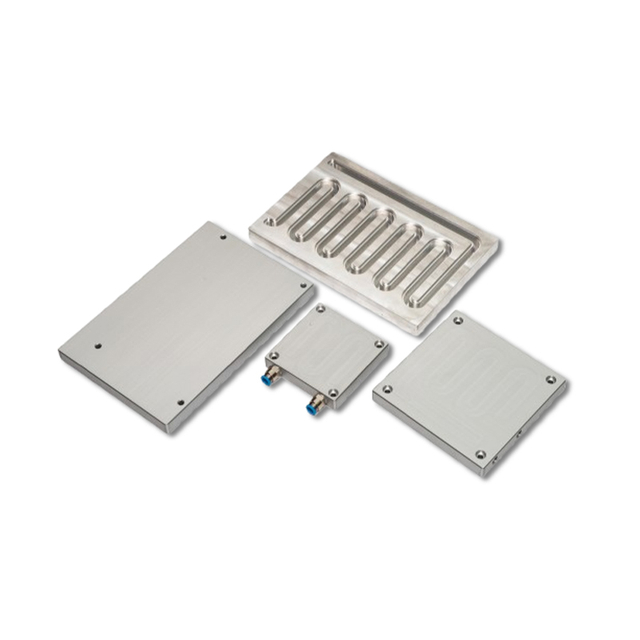
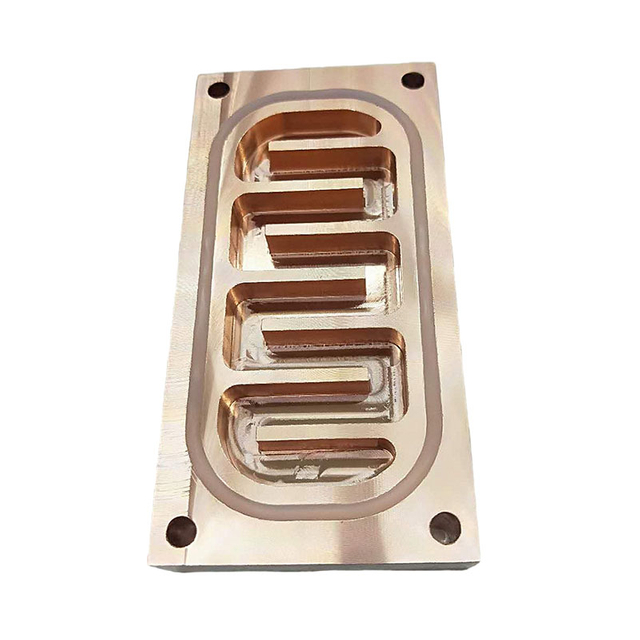
A Typical production begins with precision CNC machining of the base to create flow channels, fins, or turbulators, followed by aligning and friction stir welding the cover plate with a controlled tool path to form leak-tight joints, then finishing operations such as fly-cutting for flatness, port machining, pressure/leak testing, and final assembly and inspection.
-
Q What thermal performance improvements should I expect from an FSW cold plate compared with other joining methods?
A Because FSW allows seamless, high-conductivity material pathways and enables complex, CNC-machined internal flow channels and turbulators, FSW cold plates often deliver lower thermal resistance and more uniform coolant distribution, which translates into better heat removal per unit area and improved thermal performance in high-power-density applications.
-
Q What materials can be used in FSW cold plates and can dissimilar metals be joined?
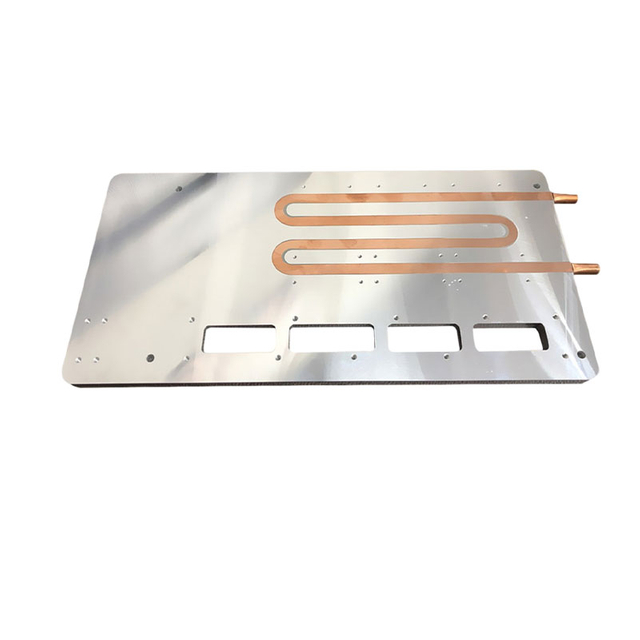
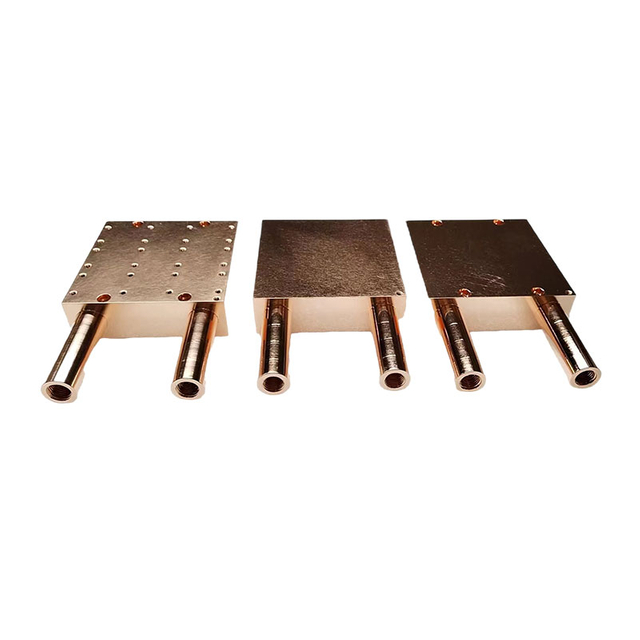
A FSW is commonly used with aluminum alloys and has been adapted for copper and some dissimilar combinations where solid-state joining is feasible; while FSW is most straightforward for similar aluminum alloys, process engineering can enable high-conductivity materials and certain dissimilar joints, but the feasibility, tool design, and thermal/mechanical performance must be evaluated on a case-by-case basis.
-
Q Are FSW cold plates truly leak-proof and how are they validated?
A FSW eliminates common melt-related porosity and filler-related voids so the joints are inherently far less likely to leak than many fusion or brazed alternatives, and manufacturers routinely validate integrity with hydrostatic or proof-pressure testing, helium or vacuum leak tests, and temperature cycling/vibration qualification to demonstrate leak rates well below typical acceptance thresholds for high-reliability applications.
-
Q What is an FSW liquid cold plate and how does it differ from brazed or fusion-welded cold plates?
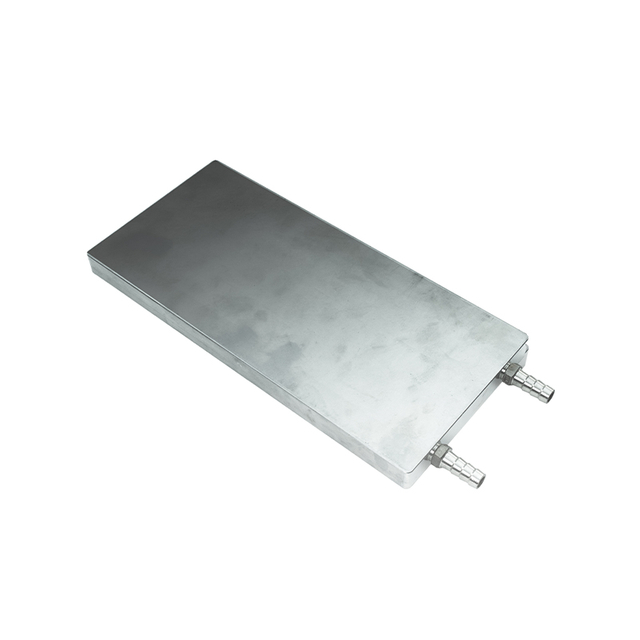
A An FSW liquid cold plate is a liquid-cooled heat-exchange plate whose cover is joined to a machined base by friction stir welding, a solid-state process that forges a metallurgical bond through frictional heating and plastic flow rather than by melting and adding filler; compared with brazed or fusion-welded plates, FSW parts typically show lower residual distortion, no porosity from melting, stronger weld integrity for aluminum alloys, and improved leak resistance.



 English